
The Botched Execution of Roxalana Druse
In 1887, a botched hanging compels Americans to turn from public hangings to the electric chair.
From
The Botched Execution of Roxalana Druse
Clip: Episode 2 | 2m 34sVideo has Closed Captions
In 1887, a botched hanging compels Americans to turn from public hangings to the electric chair.
In 1887, only 12 women had been executed in the United States before Roxalana Druse. When Druse is hanged, she suffers for 15 minutes before dying. Her botched execution causes Americans to turn to a new method of execution: the electric chair.
From
Problems playing video? | Closed Captioning Feedback
Problems playing video? | Closed Captioning Feedback
Episodes presented in 4K UHD on supported devices. Major funding for CRIME AND PUNISHMENT IN AMERICA was provided by The Atlantic Philanthropies, Emerson Collective, The Andrew W. Mellon Foundation, and...
The Botched Execution of Roxalana Druse
Clip: Episode 2 | 2m 34sVideo has Closed Captions
In 1887, only 12 women had been executed in the United States before Roxalana Druse. When Druse is hanged, she suffers for 15 minutes before dying. Her botched execution causes Americans to turn to a new method of execution: the electric chair.
From
Problems playing video? | Closed Captioning Feedback
Where to Watch Crime and Punishment in America
Crime and Punishment in America is available to stream on pbs.org and the PBS app.
Measuring Crime and Punishment
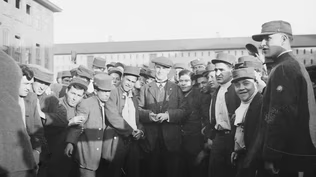
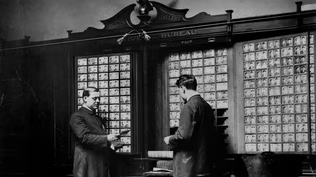
How does the way we collect and measure crime shape our understanding of it? Crime statistics can tell us how crime changes over time. But the way crime is measured, defined, and communicated can also shape public perception and policy.Providing Support for PBS.org
Learn Moreabout PBS online sponsorshipNarrator: In 1884, Americans were transfixed by a sensational murder case in Herkimer, New York.
Roxalana Druse, a 40-year-old wife and mother, killed her abusive husband.
Then she dismembered and burned his body, hoping to destroy the evidence of her crime.
But she was arrested, found guilty of murder by an all-male jury, and sentenced to death.
In the previous decade, only 12 women had been executed in the entire country.
Women's rights groups petitioned the court for mercy.
Voice: Would a jury of women have hanged Mrs.
Druse?
Why should she not have been tried by a jury of her peers?
It is monstrously unjust to hold women to a full responsibility before the law and yet deny them full privileges in law.
Women's only equality in law is at the gallows and in prison, not at the polls.
Mrs.
Lillie Devereux Blake.
Narrator: The state did not grant Roxalana Druse a reprieve.
On February 28, 1887, she was taken from her cell and led to the jail's yard, where a noose was put around her neck.
Druse did not die quickly.
It took 15 minutes for her to strangle to death.
Voice: It is perhaps a little significant that the gallows is the only piece of machinery that has stood stock still in this era of progress.
There it stands, the same clumsy, inefficient, inhuman thing it was when it first lifted its ghastly framework into the air of the dark ages.
"Harper's Magazine."
Maurice Chammah: Americans have always had a fair amount of ambivalence about the death penalty.
Many states abolished it in the 1800s, including Michigan and Wisconsin.
But also, there was a movement to bring executions behind closed doors and to make them cleaner and simpler, so that all we were doing was extinguishing someone's life.
We weren't also torturing them.
Narrator: After the botched hanging, New York did away with the gallows and adopted a new method of execution, which, according to the "New York Times," was a "step forward in the cause of humanity," the electric chair.
 New
Video has Closed Captions
Clip: Ep2 | 4m 45s | Lakota leader Crow Dog is murdered, and the federal government tries to change laws. (4m 45s)
 New
Video has Closed Captions
Clip: Ep2 | 5m 37s | The American public grapples with the question of if criminals are born or made. (5m 37s)
 New
Video has Closed Captions
Clip: Ep2 | 3m 22s | As immigrants flood into America, the eugenics movement grows and the field of criminology emerges. (3m 22s)
 New
Famous Trial Lawyer Clarence Darrow Defends the Sweet Family
Video has Closed Captions
Clip: Ep2 | 11m 10s | The legendary lawyer Clarence Darrow defends the Sweet family in their murder trial case. (11m 10s)
 New
The Green Goods Game: The Most Devious Scam in America
Video has Closed Captions
Clip: Ep2 | 7m 42s | George Appo turns to a devious scam, the Green Goods game, to make money. (7m 42s)
 New
The Lexow Commission Exposes Police Brutality and Corruption
Video has Closed Captions
Clip: Ep2 | 8m 40s | In 1894, the Lexow Commission forms to investigate corruption and police brutality among the NYPD. (8m 40s)
 New
Video has Closed Captions
Clip: Ep2 | 11m 38s | George Appo turns to pickpocketing, and Inspector Thomas Byrnes uses the Third Degree (11m 38s)
 New
The Police Clash with Bootleggers Over Prohibition
Video has Closed Captions
Clip: Ep2 | 5m 27s | Prohibition creates a black market for alcohol, leaving police struggling with enforcement. (5m 27s)
 New
Suffragists and Kate Richards O'Hare on prison conditions
Video has Closed Captions
Clip: Ep2 | 6m 26s | Incarcerated suffragists access the press; Kate Richards O'Hare describe women she meets in prison. (6m 26s)
 New
The Sweet Family faces Mob Violence in Detroit
Video has Closed Captions
Clip: Ep2 | 8m 53s | When the Sweet family moves into their new house in Detroit, they face mob violence. (8m 53s)
 New
Thomas Mott Osborne Brings Reform to Sing Sing Prison
Video has Closed Captions
Clip: Ep2 | 10m 39s | Thomas Mott Osborne dedicates himself to reforming Sing Sing Prison (10m 39s)
Providing Support for PBS.org
Learn Moreabout PBS online sponsorship






Support for PBS provided by:
Episodes presented in 4K UHD on supported devices. Major funding for CRIME AND PUNISHMENT IN AMERICA was provided by The Atlantic Philanthropies, Emerson Collective, The Andrew W. Mellon Foundation, and...